
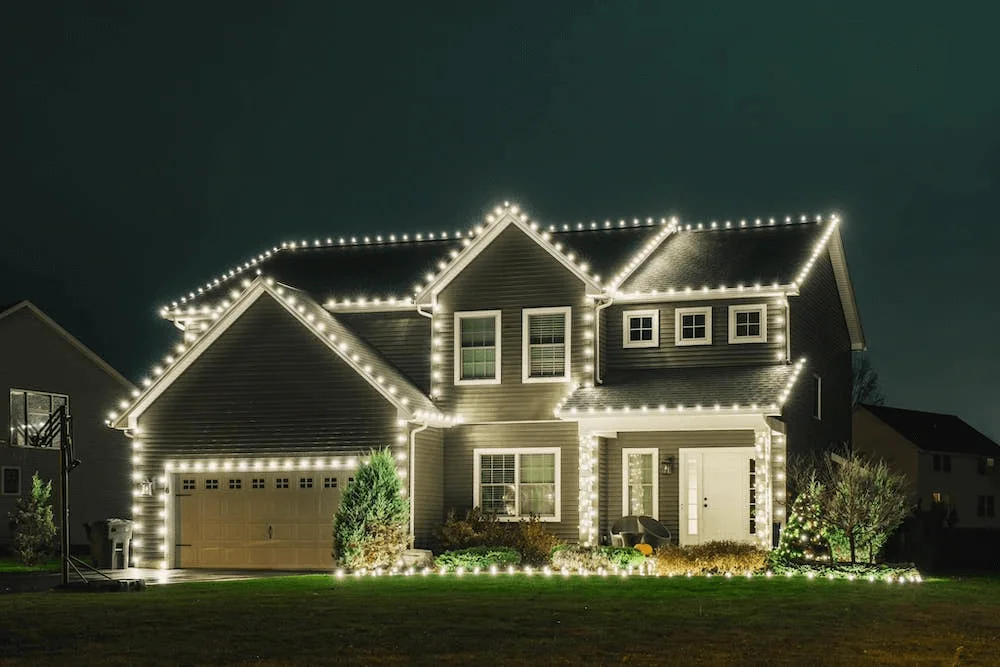
For most outdoor Christmas displays, LED lights are the practical winner. When people compare LED vs. regular Christmas lights, “regular” usually means traditional incandescent strands. LEDs use far less electricity, produce less heat, tolerate handling better, and make it easier to build a larger display without pushing the same electrical load. Incandescent lights still appeal to people who love their familiar warm glow and low purchase price, but the full-season comparison favors well-made LED products.
LED vs. incandescent Christmas lights at a glance
| Factor | LED lights | Incandescent lights |
|---|---|---|
| Energy use | Much lower for comparable holiday strands | Higher because a filament creates light through heat |
| Heat | Cooler at the bulb | Warmer at the bulb |
| Durability | No fragile filament; generally better for repeated handling | Filaments can break from impact and vibration |
| Color and style | Wide selection, including warm white and saturated colors | Familiar traditional glow |
| Initial price | Often higher | Often lower |
| Long-term fit | Usually better for large or professionally managed displays | Best when traditional appearance outweighs energy and maintenance |
Are regular Christmas lights incandescent?
Usually, yes. In everyday shopping and search language, “regular,” “normal,” or “traditional” Christmas lights generally refers to incandescent strands. Incandescent bulbs create light by heating a small filament. LED bulbs use a semiconductor, so LED vs. regular Christmas lights is normally the same comparison as LED vs. incandescent Christmas lights.
Packaging can still be confusing because both technologies are sold in traditional shapes and warm-white colors. Check the product label for LED or incandescent, listed wattage, outdoor rating, lamp type, and connection limits instead of relying only on appearance.
Energy use and heat
An incandescent bulb sends current through a filament until it becomes hot enough to glow. An LED creates light in a semiconductor, using much less energy for the same job. The U.S. Department of Energy’s holiday-light explainer reports that LED holiday strands can use about 70% less energy than conventional incandescent strands. Actual wattage still varies by product, strand length, and lamp count, so the label is the best source for a specific set.
Lower wattage matters as a display grows. Rooflines, peaks, windows, greenery, and trees can require many strands. Reducing load gives the designer more flexibility, although every installation still needs a sound power plan and must follow product limits. LEDs also produce less heat at the bulb. That does not make a display risk-free: cords, connections, outlets, extension cords, weather exposure, and overcurrent protection still matter.
The U.S. Consumer Product Safety Commission advises using lights tested for safety, checking for damaged sockets or wires, confirming outdoor-use ratings, and using GFCI-protected receptacles outdoors. Those practices apply whether the lamps are LED or incandescent.
Do LED Christmas lights look as warm as incandescent?
Older LEDs earned a reputation for looking cold or bluish. Modern products offer a much broader range. A good warm-white LED can create a classic roofline, while pure white, red, green, blue, and multicolor products support more contemporary or playful designs. The important detail is consistency: color temperature and lens style should match across the display.
Incandescent lights still have a naturally warm output that some people prefer. If you are comparing samples, view them outdoors at night and from the distance where the property will normally be seen. A bulb that looks perfect from two feet away may read differently across the street. Professional displays also benefit from consistent spacing and brightness; mixing product generations can make one section look noticeably different from another.
Durability, repairs, and storage
Incandescent lamps use small filaments that can break during installation, removal, transport, or storage. LED lamps do not use that filament and are generally more tolerant of repeated handling. Product quality still matters. Thin wire, weak strain relief, loose sockets, poor sealing, and low-quality rectifiers can create problems regardless of the lamp technology.
For a homeowner installing a few strands once a year, a failed section is an inconvenience. For a large roofline or commercial display, troubleshooting can require access equipment, labor, and coordination with the property. That is one reason professional installers tend to favor commercial-grade LED products and organized storage rather than treating every strand as interchangeable.
What does “commercial-grade” actually mean?
The term is used loosely, so ask what is included. For rooflines, professionals may use cut-to-fit wire and replaceable lamps to create clean terminations and consistent spacing. Connections, mounting methods, timers, power distribution, and labeled storage also affect reliability. A product is not automatically the right product simply because its packaging says “commercial.”
A useful quote should identify the display areas, product approach, installation, in-season service, removal, and storage. That service model is often more important than comparing the shelf price of two boxes.
Which should you choose?
Choose quality LED lights for most exterior projects, especially when energy use, scale, repeated seasonal handling, and in-season reliability matter. Choose incandescent only when its specific appearance is the priority and you accept the additional energy, heat, and maintenance tradeoffs. Do not mix technologies casually on the same visible line; brightness and color differences can make the display look patched together.
If your real decision is whether to buy lights or hire a service, compare the whole season: design, materials, installation time, ladder exposure, repairs, removal, storage, and what happens when a section fails. Brightify’s residential Christmas light installation and commercial Christmas lighting include a property-specific design and defined service scope.
Sources and further reading
- U.S. Department of Energy: How Do Holiday Lights Work?
- U.S. Consumer Product Safety Commission: Seasonal and Decorative Lighting Products
- U.S. Consumer Product Safety Commission: Holiday Safety
Frequently asked questions
Are regular Christmas lights incandescent?
Usually. “Regular,” “normal,” and “traditional” Christmas lights commonly describe incandescent strands, while LED lights use a different technology. Confirm the lamp type on the product label because both are available in familiar bulb shapes and warm-white colors.
Are LED Christmas lights cheaper to run?
Usually, yes. They use substantially less electricity than comparable incandescent strands, although the exact difference depends on the products and display size.
Can LED and incandescent Christmas lights be mixed?
They can be used on the same property when the electrical plan allows it, but visible differences in color, brightness, and spacing can make a display look inconsistent.
Are LED Christmas lights safer?
LED bulbs produce less heat and use less power, but safe installation still depends on listed products, intact wiring, outdoor ratings, GFCI protection, correct connections, and following manufacturer limits.