
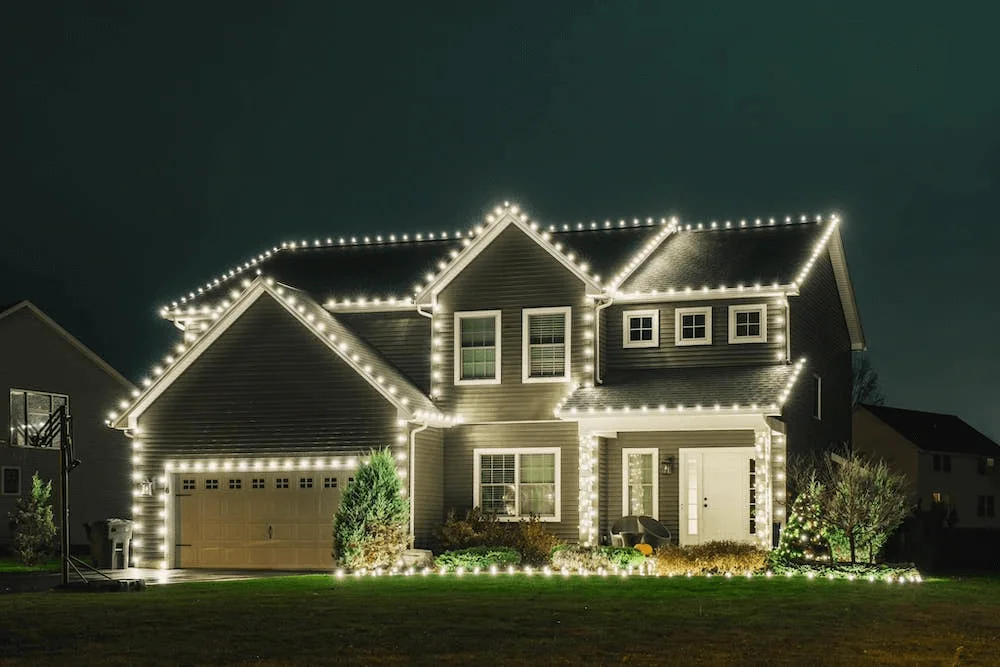
The best outdoor LED holiday lights are not one universal product. Rooflines, trees, wreaths, shrubs, columns, and commercial displays ask the lights to do different jobs. Start with outdoor certification and electrical safety, then compare the visual details—color, spacing, wire, lens shape, brightness, and how the product will be installed and repaired.
Begin with the location
For a crisp roofline, consistent spacing and straight attachment matter more than decorative effects. For trees and shrubs, strand flexibility and even distribution matter. For greenery, smaller lamps and hidden wire can keep attention on the wreath or garland. Large commercial properties may need products, wire, connections, and power distribution selected for scale and repeated seasonal service.
Make a simple list of the elements you want to light before buying. Measure them, note where power is available, and identify high or difficult access. This prevents a cart full of attractive products that do not work together on the property.
Seven details worth comparing
- Outdoor-use rating. Use products marked for outdoor use and follow the manufacturer’s connection and installation limits.
- Safety testing and condition. Look for recognized safety testing, inspect cords and sockets, and remove damaged products from service.
- Color temperature. “Warm white” varies. Buy matching products together and test a sample at night before committing to the full display.
- Spacing and lamp style. Roofline lamps, mini lights, wide-angle lamps, and icicle products create different rhythms and viewing distances.
- Wire color. Green can disappear in trees and greenery; white may blend better against light trim. Roofline systems often hide wire through careful routing and clips.
- Replaceability and repair. Ask whether lamps, sections, fuses, rectifiers, and connections can be serviced—and how easy it is to find compatible replacements.
- Connection and power plan. Strand count is not the same as safe connected load. Follow product instructions and use weather-appropriate connections and GFCI protection.
Retail strands vs. a professional roofline system
Retail strands are convenient for small displays and are often sold in fixed lengths. A professional roofline may use cut-to-fit wire, consistent socket spacing, replaceable lamps, purpose-specific clips, custom terminations, timers, and an organized power layout. The advantage is not simply a “better bulb.” It is the ability to fit the architecture cleanly and service the display efficiently.
That does not mean every project requires professional installation. Ground-level shrubs, porch greenery, and small accent areas may be reasonable DIY work for a homeowner who follows the product instructions. High rooflines, steep pitches, complicated power routing, and large trees change the risk and time calculation.
Warm white, pure white, or color?
Warm white supports a classic residential look and pairs naturally with greenery and red accents. Pure white can feel crisp and contemporary. Red, green, blue, and multicolor lamps make a display more expressive. The property’s materials and existing exterior lighting affect the result, so evaluate a sample against the house—not only on a store shelf.
Consistency matters more than the label. Two manufacturers can both say “warm white” while producing visibly different tones. Mixing them on the same roofline can create obvious bands.
What makes a product easier to maintain?
Look beyond advertised lifespan. Outdoor service involves moisture, freeze-thaw cycles, wind, handling, storage, clips, connections, and occasional impact. Products that allow individual lamp replacement and use widely available components can be easier to maintain. Labeled bins, dry organized storage, and separating products by property area reduce damage and make next year’s installation faster.
When comparing installers, ask who owns the lights, what happens when a section fails, whether service is included, and how removal and storage work. A well-supported display can be more valuable than a product with impressive specifications but no practical repair path.
Our practical recommendation
Choose outdoor-rated LED lighting with a consistent color and spacing appropriate to the element being lit. For visible rooflines, prioritize straight attachment, custom fit, replaceability, and serviceability. For trees and greenery, prioritize even coverage, wire concealment, and products designed for the intended outdoor use. Never use damaged sets or exceed connection limits.
If you want a complete seasonal service instead of a shopping list, Brightify designs, installs, maintains, removes, and stores custom residential Christmas lighting and commercial Christmas displays in Northeast Ohio.
Frequently asked questions
What color Christmas lights look most professional?
A single consistent warm white is a common classic choice, but a professionally designed red, green, multicolor, or branded display can look equally intentional when spacing and focal points are consistent.
Are C9 bulbs always best for rooflines?
C9-style lamps are popular because they read clearly from the street, but the right lamp depends on the scale, desired appearance, spacing, and architecture.
Should outdoor connections be wrapped in plastic?
Follow the product and manufacturer instructions. Improvised wrapping can trap moisture. Outdoor-rated equipment, proper connection placement, and GFCI protection are more important than a homemade enclosure.